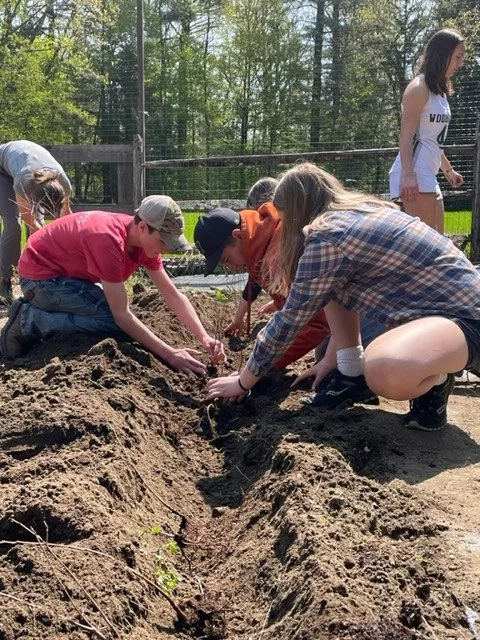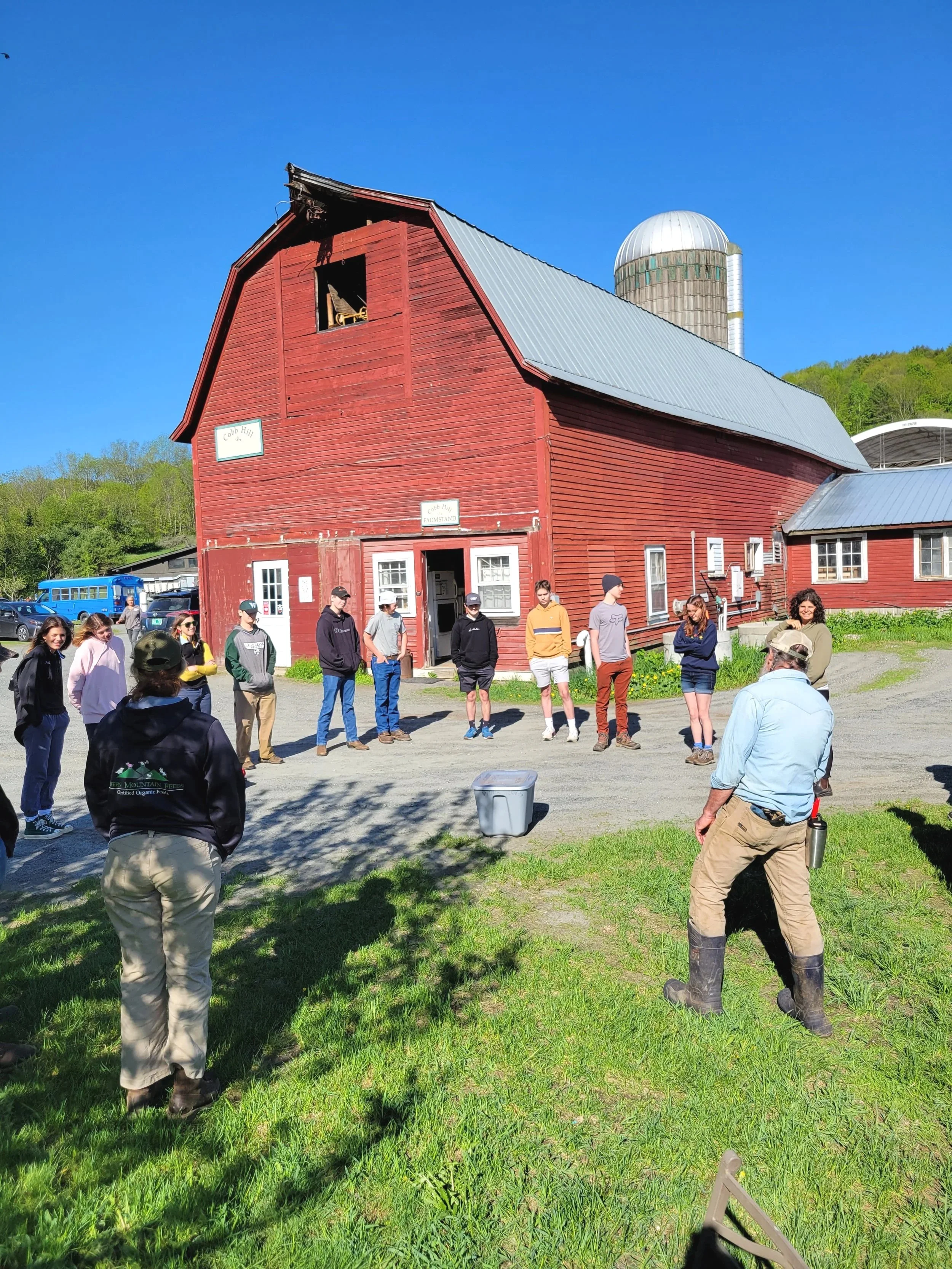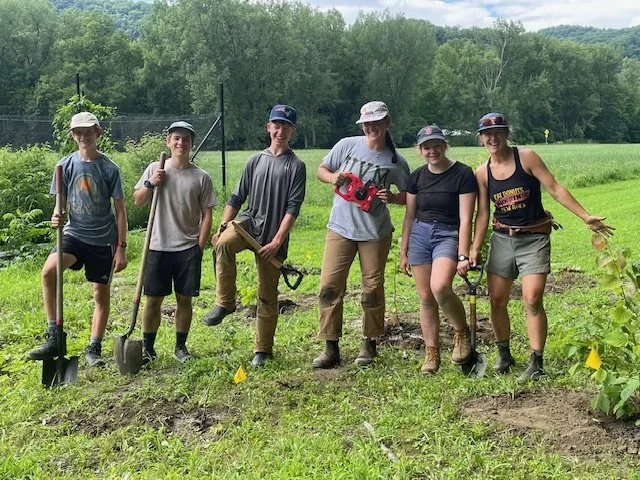
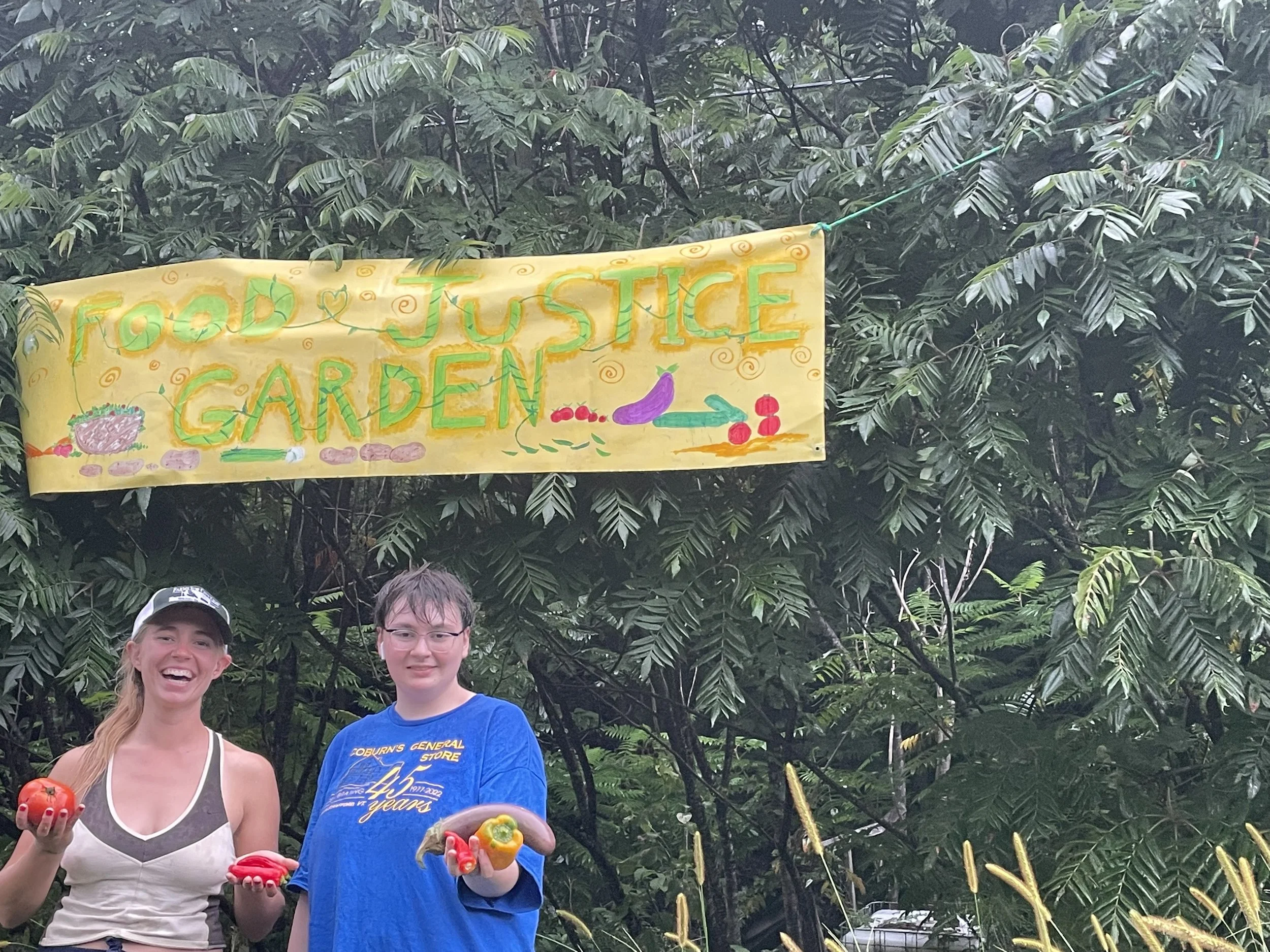
Field Trips. Vermont is rich with farmers practicing a number of regenerative agricultural methodologies. We partner with farmers and community sites to create opportunities for students to learn from the land and those that are growing on it. Collaborations have resulted in installations of agroforestry systems that enhance the biodiversity and food production on local farms.
These have included student planted: pollinator hedgerows, silvo pasture trees and alley cropping systems. Place based learning opportunities like these build valuable community connections and real hands on skill building.
Our Food Justice Garden serves as our main teaching site, where we host groups for hands-on learning sessions on regenerative agriculture (cover cropping, crop rotation, companion planting), agroforestry, permaculture, and perennial foods. It is also home to our tree nursery and food forest, where visitors can learn about species, varieties, and methodologies for growing diverse polycultures.
Food Justice because we are all connected through the food we eat, where it comes from, how it’s grown and what happens to it after we have consumed it. All of this encompasses our food system and everyone has the right to access healthy foods that don’t degrade the landscape but contribute to healthy soil, water, and communities.
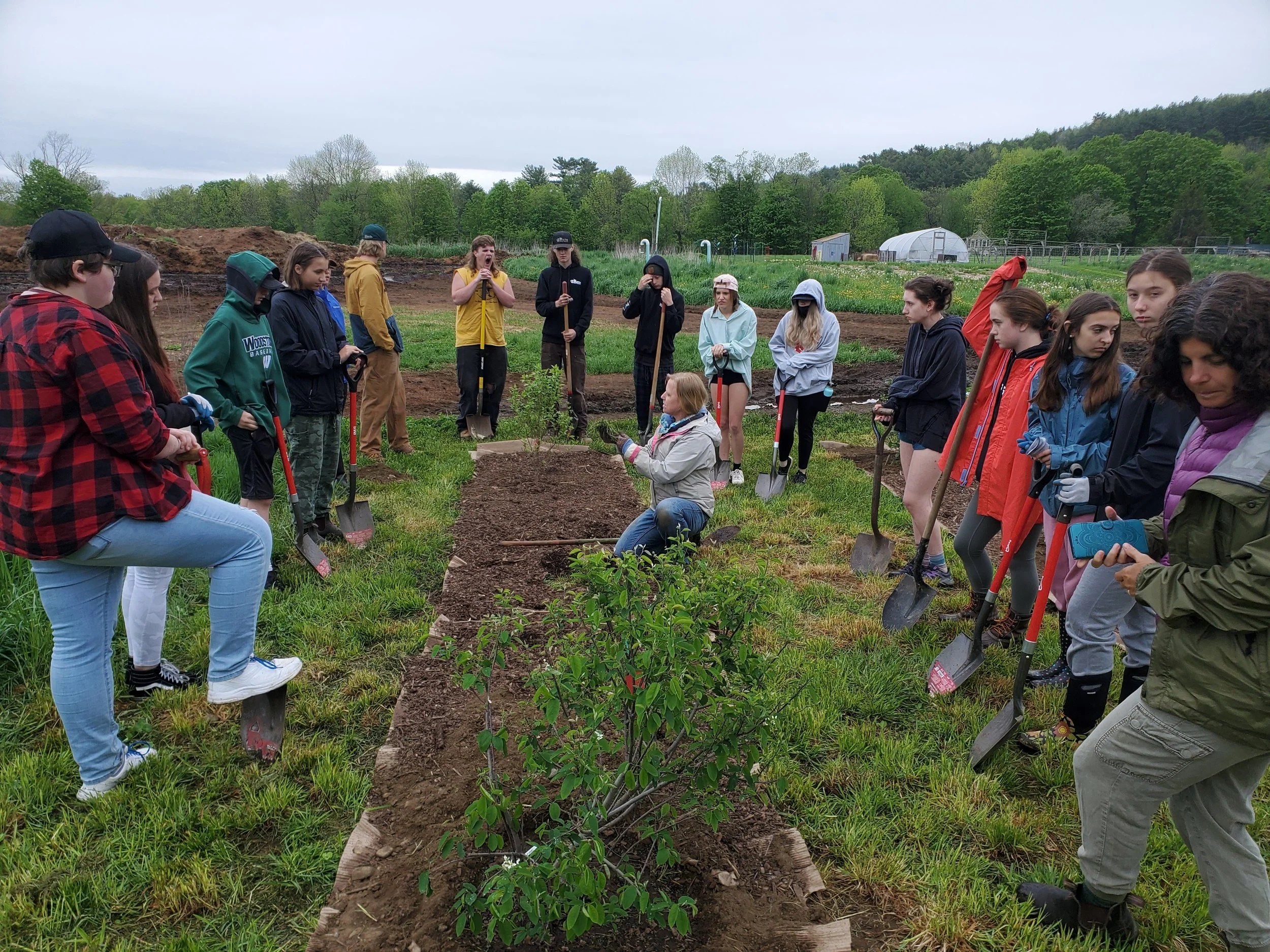
School Garden Support. We help design diverse campuses and school gardens to increase outdoor learning possibilities for students and teachers. We partner with schools to build hands on, outdoor learning opportunities that make gardens easily accessible with limited timeframes and diverse enough for a wide range of programming possibilities. Working with both the Flexible Pathways Coordinators and individual teachers, we craft outdoor learning that complements your curriculum and learning objectives.
Collaborations have resulted in student planted and maintained native tree nurseries, pollinator hedgerows, fruit tree orchards, berry bushes, and perennial vegetables gardens.
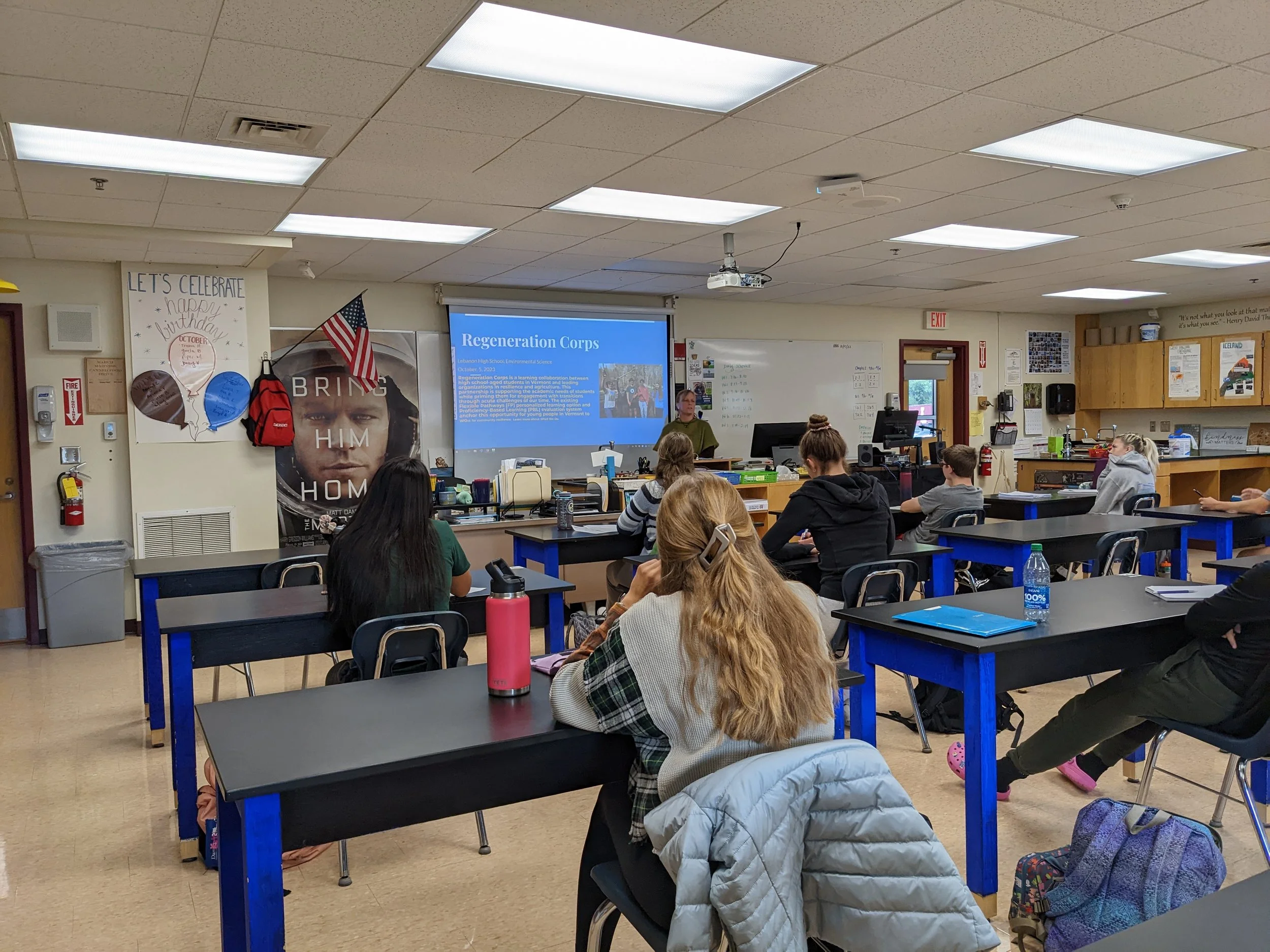
Classroom Presentations. We offer a range of presentations related to climate solutions, regenerative agriculture, agroforestry, permaculture, soil health, watershed health, regenerative design, and a Just Transition. Highlighting whole systems thinking and multi-solving, we focus on making connections between challenges and solutions, leaving students with a good understanding of practical methodologies for climate mitigation locally, regionally and globally.